Richard Jean So
Rhodes Chair in Digital Humanities Associate Professor of English, Duke University
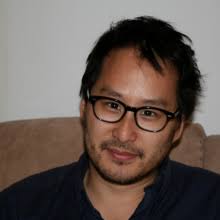
My research examines what changes when machines and artificial intelligence become participants in culture: making it, consuming it, and judging it. Methodologically, I combine close reading of how culture actually works with large-scale computational analysis, experiments, and surveys.
Four questions drive the work. How do people decide what counts as slop, and why do those judgments spread the way they do? What can LLMs currently do creatively, and how might that be extended? How do humans and machines compete for interpretive authority in a world increasingly defined by human–AI interaction? And what are the downstream effects of AI model collapse on digital culture — are we seeing a related cultural collapse?
These are humanistic questions being decided at technical scale, and my work operates at the intersection of cultural studies and computer science: it appears in PMLA and Critical Inquiry, as well as PNAS, ICLR, and CHI. My research has been supported by both humanistic and scientific organizations, such as the ACLS and Schmidt Sciences. I direct the Cultural AI Lab at Duke.
This grows out of a decade spent studying culture on online platforms and who gets heard on them. That work culminates in Fast Culture, Slow Justice: How Digital Platforms Failed Black Lives Matter (Columbia University Press, 2026), which draws on data from Twitter, Wattpad, and Goodreads to ask why so much online storytelling about racial justice produced so much attention and so little durable change. I also write for general audiences, including The New York Times and The Atlantic.
I am a core member of the Rhodes Information Initiative at Duke and a faculty affiliate of the Society-Centered AI Initiative.
Recent publications
-
Critical Confabulation: Can LLMs Hallucinate for Social Good?
International Conference on Learning Representations (ICLR), 2026. Read paper With Peiqi Sui, Eamon Duede, and Hoyt Long. -
The Social AI Author: Modeling Creativity and Distinction in Simulated Cultural Fields
AI & Society, 2026. Read paper With Edwin Roland and Hoyt Long. -
Why Slop Matters
ACM AI Letters, 2026. Read paper With Cody Kommers, Eamon Duede, Julia Gordon, Ari Holtzman, Tess McNulty, Spencer Stewart, Lindsay Thomas, and Hoyt Long. -
What Does AI Do for Cultural Interpretation? A Randomized Experiment on Close Reading with Exposure to AI
ACM Conference on Human Factors in Computing Systems (CHI), 2026. Read paper With Jiayin Zhi, Hoyt Long, and Mina Lee.
Forthcoming
-
How Fiction Powers Large Language Models
New Literary History. With Edwin Roland. -
Cultural AI: Generative Technologies for the Humanities
Modern Fiction Studies. With Aarthi Vadde. -
Spoiler Alert: Narrative Forecasting as a Metric for Tension in LLM Storytelling
Conference on Language Modeling (COLM), 2026. Read preprint With Peiqi Sui, Yutong Zhu, Tianyi Cheng, Peter West, Hoyt Long, and Ari Holtzman.
Working together
I am always looking for new collaborators. Faculty, graduate students, and undergraduates interested in this work should visit the Cultural AI Lab page to see current projects and ways we might work together.